
How Leo Karaya Built a Profitable Maize Farming Business in Narok


Leo Karaya is a farmer based in Narok County, specializing in seasonal maize farming, particularly the popular 6213 maize variety.
Apart from farming, he is also a skilled freelance photographer and photo artist, balancing agriculture and creative work to build multiple income channels.
For Leo, farming is more than a business. It is a lifestyle that provides food, income, and independence.
As demand for maize continues to grow across Kenya, he has positioned himself as a reliable supplier to traders in Narok.
His journey shows how young people can build a successful agribusiness through consistency, smart investments, and patience.
Read also: Is Spirulina Farming A Good Biz?
From the beginning, his goal has been simple: create a better future for himself and his family.
"Nadai watoi wangu wakuwe na a better life than the one I had growing up," he says.
Hii ndio motivation humfanya aendelee kusukuma hata wakati farming conditions si easy.
Most High Jah ndio source ya strength yake, na anaamini hard work plus faith can take someone far.
Kufuga pigs iko na doh? Is Pig Farming Profitable?

👉 Download the MESH App on Google Playstore. Ni 2MB!
What Inspired Leo to Start Maize Farming?
Leo's biggest inspiration came from his late father, who taught him the importance of being self-sufficient and financially independent.
Growing up, he learned that farming could provide stability and allow someone to support others in the community.
His dream has always been to live comfortably, provide for his family, and help others whenever possible.
Seeing the impact that farming can have on livelihoods continues to motivate him daily.
Beyond profits, anapenda kuona chakula ikitoka kwa shamba yake ikienda kwa market na kusaidia watu wengi.
Poultry farming iko aje? Cheki: Kuku Chronicles: The Ultimate Guide to Starting a Kuku Business in Kenya
Like many successful farmers in Kenya, Leo believes agriculture is one of the few industries where someone can start small and grow steadily over time.
That mindset has kept him focused since the beginning.
How Much Capital Do You Need to Start Maize Farming in Kenya?
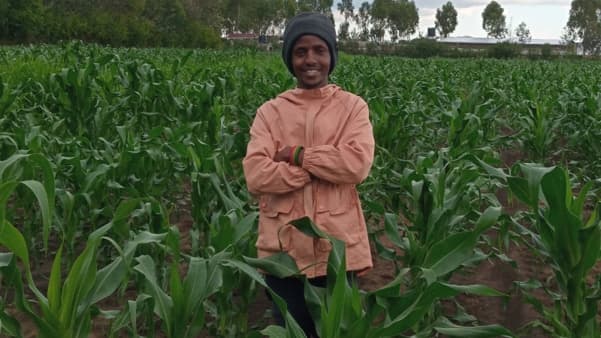
Leo started farming in early 2022 on his family's land. His mother supported him with KSh 79,000, which he used to cultivate six acres of maize.
This covered land preparation, seeds, fertilizer, labor, and other farm expenses.
Nilianza kwa family farm na nikafocus on doing things the right way from day one.
Instead of rushing expansion, aliamua kujenga biashara pole pole while learning practical lessons on crop management and market timing.
As profits started coming in, Leo made another smart move. Part of his earnings were invested in Bitcoin in late 2022 after conducting his own research.
While he acknowledges that cryptocurrency is highly volatile, he viewed it as a long-term savings strategy and a way to diversify income beyond farming.
How He Found His First Customers
Finding customers is one of the biggest challenges for many farmers, but Leo's first buyers came through relationships and networking.
His first customer was a maize trader named Ndung'u, whom he met through a neighbor. Later, he connected with another trader called Maggy at Narok's main food market.
After visiting his farm and seeing the quality of his maize, she became one of his regular buyers. "Ukulima ni backbone ya uchumi wa nchi juu everyone gotta eat."
Maggy's customers who sell roasted maize (mahindi choma) and boiled maize (motungo) increased demand significantly.
Hapo ndio Leo alianza kuona potential kubwa ya biashara. Instead of selling directly to consumers, he focused on becoming a supplier to traders who already had established markets.
Today, his long-term goal is to expand beyond Narok and supply larger wholesale markets across Kenya.
How Leo Maintains Consistent Demand for His Maize
According to Leo, success in farming starts long before harvest.
He focuses heavily on proper crop management during the early stages of growth.
By following recommended farming practices and avoiding shortcuts, he ensures his maize remains healthy and productive throughout the season.
"Kutunza crops mapema ndio siri," he explains. Ukiharibu early stages, unaweza struggle mpaka harvest.
Healthy crops produce better yields, which naturally attracts repeat buyers.
He also values respect and good relationships with customers.
Maintaining trust with traders has helped him secure repeat business year after year.
Why Maize Farming Is Worth It

Leo loves farming because it gives him freedom and peace of mind.
Unlike many jobs, farming allows him to work on something he owns while directly benefiting from the results of his effort.
"Ukulima hunipatia freedom, chakula na peace of mind besides profits," he says.
Although there have been seasons when he experienced losses, he has never considered quitting.
In fact, farming became the first hustle that earned him a six-figure income.
Hiyo peke yake ilimshow kuwa agriculture inaweza change maisha if approached seriously.
For young people looking for profitable farming opportunities in Kenya, his story proves that farming can become a viable business when managed professionally.
Challenges Facing Maize Farmers in Kenya

Like many farmers, Leo faces several challenges.
The biggest challenge is unpredictable weather. Drought remains a major threat, especially because he has not yet drilled a borehole or installed a complete irrigation system.
Although some farmers use drip irrigation to reduce risk, weather patterns can still affect yields significantly.
Fortunately, many seasons have received enough rainfall to sustain his crops.
He also deals with common pests such as fall armyworms, which are among the biggest threats to maize farming in Kenya.
Kuna days mambo huwa tough, but giving up is never an option.
Farming teaches patience because every season brings new lessons and opportunities.
Although Leo only recently started posting his hustle on MESH, he says the platform has already had a positive impact on him.
What stands out most is the encouragement he has received from other MESHers.
Seeing business stories, success journeys, and supportive feedback has helped strengthen his mindset as an entrepreneur.
"Psychologically imenijenga sana," he says.
He believes platforms like MESH create opportunities for learning, networking, and business visibility.
As he continues sharing his farming journey, he hopes the platform will help connect him with more customers and fellow agripreneurs.
Leo's advice is straightforward: start with whatever land you have access to, whether it is family land or leased acreage.
"Anza na any size of land whether inherited or a lease. Na usigive up along the way."
He also encourages aspiring farmers to conduct research, embrace mechanization, and think beyond seasonal income.
Investing farming profits into other income-generating opportunities can create greater financial stability.
Another long-term goal he recommends is establishing an orchard.
Fruit farming can provide an additional source of revenue while reducing dependence on seasonal crops.