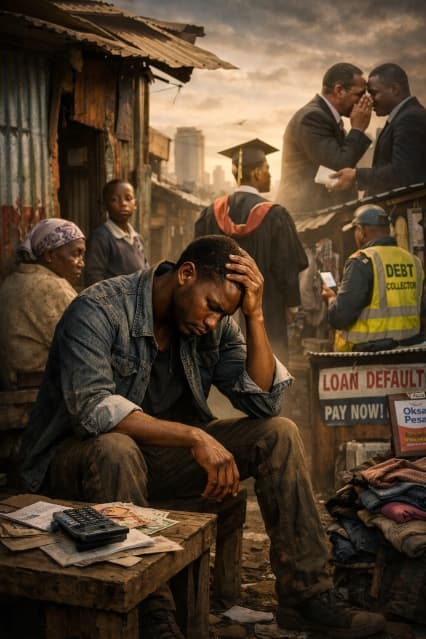
- The "Unspoken" Burden: Family, Community & Culture
This is often the heaviest cross. It’s not a policy issue, it’s a people issue.
· The "Black Tax" on Steroids: The moment a young person gets their first capital or starts making a small profit, they aren't just a business owner; they become the family's emergency fund. A KSh 500 daily profit is expected to cover a sibling's school fees, a parent's medical bill, and an uncle's funeral contribution. The business is bled dry before it can walk. · The Graduate Expectation Trap: A parent who sacrificed to see their child through university expects them to get a "dignified" office job, not sell mitumba clothes in Gikomba or chapati in a kibanda. Starting a business is seen as a failure to launch, a "shame" they must hide while waiting for a corporate job that may never come. · The "Who Do You Know?" Pressure: Success is often pre-framed as needing a godfather or a connection. When a young person fails, the community whispers it's because they didn't have a "mjomba" (uncle) to open doors, dismissing their effort and strategy and creating deep self-doubt.
- The Capital and Cash Trap
It's not just about getting money; it's about the kind of money.
· The "Friends & Family" Seed Round (with Shame): The primary source of capital is their personal network, which is also poor. Asking for KSh 5,000 from a friend means carrying the emotional weight of potentially losing that friendship if the business fails. · Predatory Digital Lenders: With no collateral, youths turn to the Oksash, Tala, and Branch apps of the world. A loan for stock that is meant to be a lifeline quickly becomes a noose. The public shaming tactics of these apps—calling their entire phonebook contact list when they default—is a uniquely traumatic experience that has led to depression and, in tragic cases, suicide. · The Working Capital Guillotine: You might get KSh 50,000 to start a boutique. You buy stock, pay rent, and it’s gone. There's no "float." You sell your stock, but a customer needs a different size. You have no money to restock, so you watch helplessly as your customers walk to a bigger competitor while your cash is tied up in unsold inventory.
- The Psychological Warfare (Mental Health Crisis)
The internal battle is the most silent and the most devastating.
· Hustle Culture Burnout: The glorified "hustler" narrative means working 16-hour days, seven days a week, is a badge of honor. You can't admit you're tired because your entire identity is tied to the grind. There is no room to be a whole human being—to rest, to be sick, to grieve. · Imposter Syndrome on Overdrive: You walk into a networking event with people discussing seed rounds and scaling. You look at your small Instagram page with 200 followers and feel like a complete fraud. You can't pitch your business without feeling like you're playing dress-up. · The Paralyzing Fear of Failure: In a "survival economy," a failed business isn't a learning experience—it's an economic death sentence. It means going back to being fully dependent on parents or facing real hunger. This immense pressure stifles the very risk-taking that entrepreneurship requires.
- The "System" as a Human Enemy
The structural issues that manifest as daily personal battles.
· KRA as an Extortionist, Not a Partner: Before you even make a profit, you're navigating a confusing tax system where the fear of a non-compliance penalty is paralyzing. There's no grace period, no feeling of "let's grow together." You are treated as a potential criminal from day one. · The County Government Shakedown: The "kanjo" (county askaris) aren't enforcing rules; they are often a daily tax on your poverty. You pay bribes for your signage, for your goods on the sidewalk, for your very existence. It’s a humiliating, demoralizing dance you must learn just to survive. · Digital Misinformation and "Guru" Cults: A desperate youth, looking for a roadmap, finds only an army of fake online "mentors".